 +44 (0) 20 7127 5125
 Alumni Login
If you would like to discover more about coaching and training as a coach, do come along to one of our free upcoming virtual open events or webinars.
Practitioner Diploma / “The diploma gave me permission to stop trying to coach like someone else”
17th February
Reading time 11 minutes
Share this article:


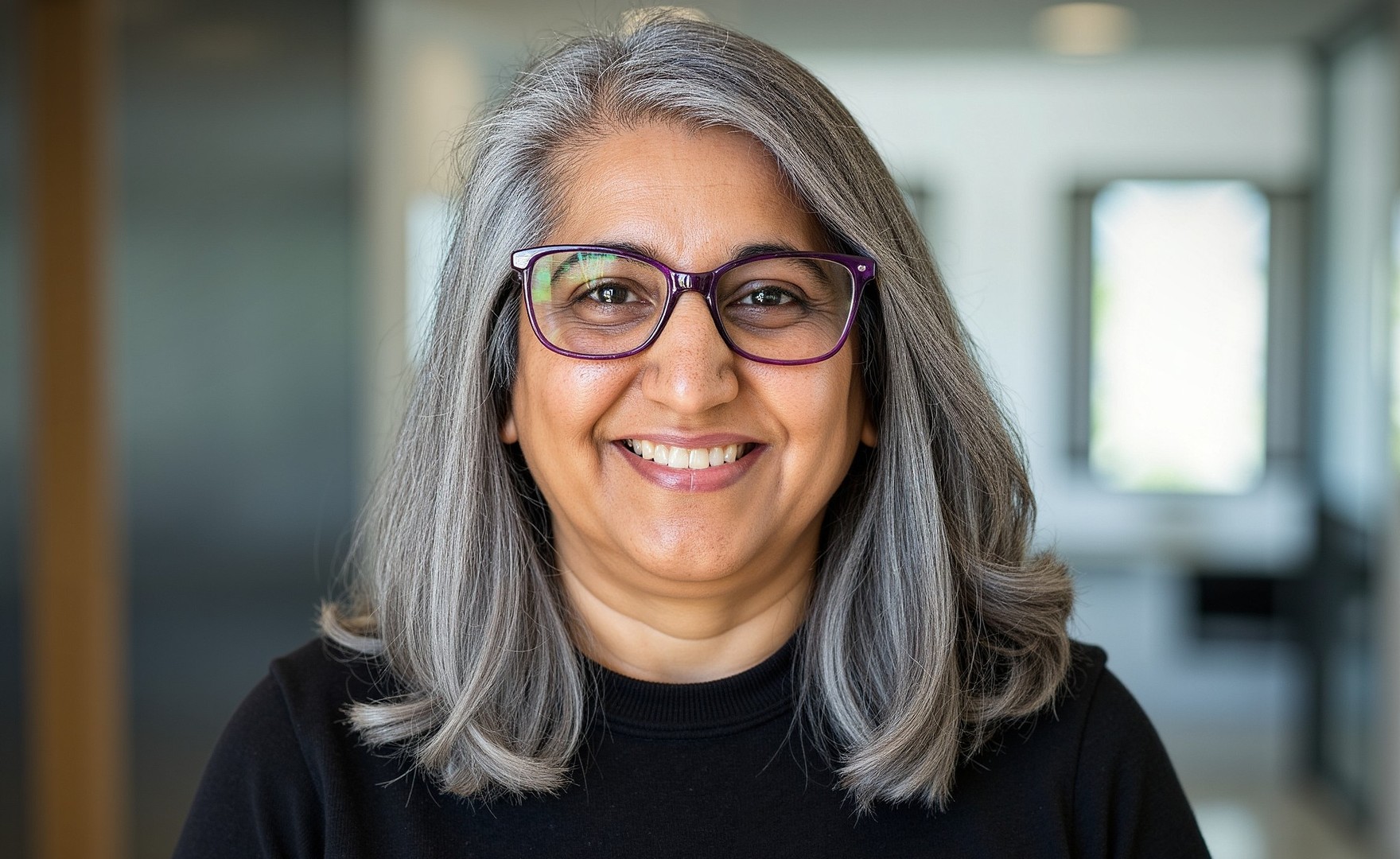
Jay Jupp specialises in helping leaders turn life–work collisions into opportunities for clarity, connection and meaningful performance. With more than 20 years’ experience in leadership development, organisational culture and executive coaching, she brings a deeply human lens to the challenges leaders face. Her work equips organisations to reduce hidden people costs, strengthen culture, and create conditions where people feel seen, supported and able to thrive. In this interview, Jay reflects on her Practitioner Diploma journey with the AoEC, the evolution of her coaching approach, and the principles that guide her work with leaders.
How has your L&D and OD background shaped the way you work as a coach?
My background in learning and organisational development has given me a strong systems lens. I am always curious about whether an issue is truly a person problem, or whether it sits within the wider system, the culture, structure, or conditions people are operating in. Because I understand how organisations work, clients often say they feel understood, or at least that the context they are operating within is recognised.
I performance coached full time from 1998 to 2005, which taught me how to get the best from people and the conditions that enable performance. Coaching became a golden thread through my leadership career, shaping how I led teams, role modelled behaviours, and enabled others to think and act for themselves.
Alongside this, I trained and worked as a facilitator from 1998, with a strong grounding in adult learning and experiential approaches. One of the first leadership programmes I ever designed had no traditional classroom teaching. It moved from self-awareness through psychometrics, to leading others via 360 feedback shared by peer buddies, into action learning sets and individual coaching. What began with a sceptical group became a deeply transformative experience, shifting leadership capability by 25 per cent.
What struck me most was that they learned a huge amount, yet I taught them nothing. The insight, growth, and change came from within the group itself. This helped me see just how creative, resourceful, and capable people are when the right conditions are in place.
That belief continues to shape how I work today. My coaching and facilitation focus on creating the conditions for awareness, choice, and action, with impact not just for individuals, but for teams and the wider organisation.
What were some of the positives and challenges you experienced while doing the diploma?
One of the biggest positives of the diploma was the permission it gave me to slow down, reflect, and examine how I coach, not just what I do, but who I am when I am coaching. The focus on presence, listening, and relationship helped me reconnect with why I coach.
I found the emphasis on experimentation particularly valuable. Being encouraged to try things out, notice the impact, and learn from what happened, rather than striving to get it right, helped me appreciate how creative coaching can be and how powerful it is to work with the whole person.
The learning community was another significant positive. Coaching alongside peers and receiving thoughtful feedback helped me see my strengths more clearly. Hearing others describe the space I created as psychologically safe was deeply affirming and shaped how I now work with clients.
At the same time, the diploma stretched me in important ways. I found contracting challenging, particularly making it explicit without losing the conversational flow that feels natural to me. I also learned to sit more comfortably with uncertainty, trusting my intuition, allowing silence, and resisting the urge to intervene too quickly.
Overall, the positives and challenges were inseparable. The areas I found most difficult were also where the most growth occurred. The diploma strengthened my self-trust, expanded my range, and deepened the quality of presence I now bring to my coaching.
What is your top advice to others considering coach training?
My top advice would be to lean in.
On day one of the diploma, I was far more nervous than I expected to be. After coaching for many years, I found myself worrying, what if my skills were not good enough, or not at the standard required? I realised that while I was caught up in that fear, I was not actually learning.
After the first day, I had a conversation with myself and made a conscious decision to lean in and see where the journey would take me. Letting go of the need to prove myself opened my mind to new ways of thinking, experimenting, and being. From day two onwards, the learning shifted and deepened.
Coach training is not just about gaining tools; it is a process of self-discovery. The more willing you are to lean in, stay curious, and allow yourself to be shaped by the experience, the more transformative it becomes.
Looking back at doing your diploma, what has been its lasting impact on you as a person and you as a coach?
The lasting impact of the diploma has been a deeper sense of self trust, both personally and professionally. As a person, it helped me soften my inner critic and let go of the need to prove myself. I came to accept that being perfectly imperfect is not a weakness, it is part of being human, and it has changed how I show up in my work and relationships.
As a coach, the diploma validated and strengthened the way I naturally work. It helped me trust my intuition, creativity, and embodied presence, and to recognise these as assets rather than things to rein in. I now pay much closer attention to the space I create with clients, how safe it feels, and how I use silence, pace, and presence to support insight and change.
It also deepened my ethical practice. I am clearer in my contracting, more confident holding boundaries, and more comfortable working with complexity and uncertainty. I no longer feel the need to rush to solutions.
Overall, the diploma did not just refine my coaching skills, it changed how I see myself. I am more grounded, more confident, and more at ease with who I am as a coach, which ultimately allows my clients to do deeper and more meaningful work.
Can you tell us more about your personal coaching model and how this has evolved since doing the diploma?
During the diploma, one of my biggest realisations was that I don’t coach in a linear or formulaic way, I coach by dancing with my clients.
What I came to understand is that my intuition is not something to suppress or second-guess, but a core coaching tool. I create a coaching state where I move with the rhythm of the client: listening deeply, sensing shifts in energy, noticing what is said and unsaid, and responding in the moment. The diploma helped me recognise and trust this way of working.
I hadn’t fully appreciated how creative coaching can be until the programme invited us to experiment. I realised that coaching is not just a cognitive process, it’s embodied. My whole body is part of the work: my presence, posture, pace, facial expression, use of silence, and even where I place my attention all shape the quality of the space I create with a client.
While structure and contracting are essential, I noticed that when I relied too heavily on models, something closed down. Through the diploma, I learned how to contract clearly and ethically, and then let go, allowing intuition, creativity, freedom and responsiveness to guide the conversation. This balance between structure and fluidity is now a defining feature of my coaching.
My coaching draws on co-active and solution-focused approaches, particularly in how I contract, create momentum and support clients to move forward. What the diploma helped me realise, however, is that these approaches come alive when they are held lightly. Rather than following a sequence, I allow them to inform my intuition, creativity and responsiveness in the moment.
What I consistently noticed was that this way of working opened clients up to different ways of thinking and being. When clients feel deeply seen, sensed and met, they are more willing to explore, experiment and access insights that wouldn’t emerge through a purely rational or problem-solving lens.
The diploma gave me permission to stop trying to coach like someone else and instead refine a model that fits me. Learning to trust my intuition, creativity and embodied presence has transformed my coaching and strengthened the impact I have with clients.
You now work as an award-winning executive coach and set up your own practice Inner Reach Coaching in 2022; can you tell us about the type of clients you are working with?
I work with a diverse mix of clients, including executives, senior leaders, managers, and private individuals, all on a journey of self discovery and change. When I first set up Inner Reach Coaching in 2022, I was very clear that I wanted to rebalance leadership teams for ethnicity and gender through the transformative power of coaching.
Over time, I realised that while this remains deeply important to me, I was not fully using the breadth of my learning and organisational development experience. My work naturally expanded to support leaders and individuals navigating confidence, identity, and transition within complex systems.
A number of my clients come to me experiencing impostor syndrome, often at pivotal moments in their careers. This includes, but is not limited to, women, neurodiverse clients, and women going through menopause who have experienced a loss of confidence or self worth. I also work with senior leaders facing high levels of change, pressure, or visibility, where performance and personal impact are closely intertwined.
What connects all of my clients is a desire to understand themselves better and to move forward with greater clarity, confidence, and agency. My role is to create a safe, challenging, and compassionate space where people can reconnect with their purpose and strengths, question limiting beliefs, and make choices that feel aligned with who they are and the context they operate within.
My work sits at the intersection of leadership, identity, and performance, supporting people not just to do their roles well, but to feel more grounded and self trusting as they lead their lives and careers.
A lot of your work centres around the theme of when work and life collide and you have created the People Cost Calculator which helps reveal the hidden drains on culture, performance and budget. Can you tell us more about the tool and how you are working with organisations?
The idea for the People Cost Calculator came from years of working inside organisations and seeing how often human issues are treated as individual performance problems rather than systemic risks. I noticed that when life and work collide, through health, caring responsibilities, confidence shocks, menopause, neurodiversity, or significant change, the real cost is rarely visible, yet it shows up everywhere.
The People Cost Calculator helps organisations make the invisible visible. It surfaces the hidden drains on culture, performance, and budget that arise when people are struggling but unsupported. Rather than focusing on blame or deficit, it invites leaders to look at the conditions they are creating and the impact those conditions have on engagement, capability, and retention.
I use the tool as a starting point for meaningful conversation. It opens up dialogue at leadership and organisational level about where risk is building, where capacity is being lost, and where small, human centred interventions could make a significant difference. It also helps shift the conversation from opinion to evidence, which many leaders find both grounding and relieving.
In practice, the calculator often becomes a bridge. It connects individual coaching themes with wider organisational patterns and supports leaders to take responsibility for creating environments where people can perform, grow, and sustain themselves over time.
At its heart, the work is about helping organisations see and act sooner, before people disengage, burn out, or leave. When leaders understand the true cost of inaction, they are far more willing to invest in cultures that support both human wellbeing and organisational performance.
More broadly, this work reflects my belief about the future of work. As technology and AI continue to accelerate, our humanity becomes even more important, not less. The conditions for high performance have not fundamentally changed since I first began coaching. People want to be seen, to use their strengths, to do meaningful work, to add value, and to belong. When organisations create the right conditions for this, people and performance grow stronger together, not at the expense of one another.
Can you share a success story or testimonial from one of your clients that highlights the impact of your coaching?
One example comes from my work with a senior leader navigating complexity and change within their role. Despite being experienced and capable, they were seeking greater clarity and confidence in how they wanted to lead. Reflecting on the impact of our work together, they shared:
“Working with Jay has been an insightful and empowering experience. Jay has deep knowledge on leadership, career development and influencing. Working with Jay has helped me to improve my self awareness, as well as helping me gain clarity and confidence in my professional journey.”
Alongside this, a very different but equally powerful example comes from my work with a final year university student during a period of significant anxiety and self doubt. Our work focused on self leadership and rebuilding trust in themselves. They later reflected:
“At a time when I felt lost in the noise of my own thoughts, Jay arrived like a quiet sunrise, soft, steady, and full of light. In her presence, I found something that had always been missing, a key to all the inner battles I couldn’t name. What I’ve learned with Jay is more than self help, it’s self recognition. I am deserving. I am capable. I have something beautiful to offer the world, and now, I believe that.”
What connects both experiences is the same core work. Whether someone is leading an organisation or learning to lead themselves, sustainable change begins with awareness, confidence, and trust in oneself. Creating the conditions for that inner shift is where I see the most meaningful and lasting impact of my coaching work.
What do you find most rewarding about your work as a coach, and what continues to inspire you about the work you do today?
What I find most rewarding is witnessing people achieve things they once believed were not possible, or simply out of reach. Sometimes this looks like a clear goal being met; at other times it’s about holding a steady, safe, and spacious environment where the client does the work themselves. Both are equally fulfilling.
Coaching has always felt like a calling to me - the place where my lived experience, professional background, and deep love of working with people come together. My career didn’t start in coaching; it began in medical sales, where I thought my future lay in marketing. But being asked to run sessions, train colleagues, and support others’ development was the moment something clicked. I realised how much I loved helping people grow and achieve things they hadn’t believed were within reach.
From there, coaching ran like a golden thread through my career - in performance coaching, leadership development, facilitation, and senior learning and organisational development roles. Even through redundancy and reinvention, that thread remained constant. When I decided to set up my own practice in 2022, it wasn’t a strategic career move; it was a commitment to work that felt meaningful, purposeful, and aligned with who I am.
Training with the AoEC deepened that alignment. It validated and strengthened my instinctive way of working, gave me permission to be unapologetically myself, and helped me refine a coaching model that fits me rather than forcing myself into someone else’s approach. That experience continues to inspire me.
Some of the most powerful moments in coaching are those that are difficult to put into words - when someone begins to see themselves with more compassion, reconnects with their purpose, recognises their strengths, or feels capable and renewed. The ripple effects of that shift travel into their relationships, their leadership, and their wider lives.
To do work that feels purposeful, that aligns with my values, and that contributes to more compassionate, emotionally intelligent leadership is a privilege. That is what inspires me every day.
Our sincerest thanks to Jay for sharing her personal experience of coach training with the AoEC.
News
AoEC appoints Virginia Molet to head Spanish launch
20th March 2026 by Lee Robertson
The Academy of Executive Coaching (AoEC) is delighted to announce the appointment of Virginia Molet, founder of Gravitae Academy, as…
Interview
Practitioner Diploma / “There is true power in presence”
20th March 2026 by Lee Robertson
Kofi Kyei is a people centred talent and culture specialist with deep experience partnering with blue chip organisations across commerce…
Article
How organisations can help their employees look inwards and learn about themselves
20th March 2026 by Rochelle Trow
Organisations say they want resilient, grounded leaders who can navigate complexity without burning out. Yet the structures they reward still…