 +44 (0) 20 7127 5125
 Alumni Login
If you would like to discover more about coaching and training as a coach, do come along to one of our free upcoming virtual open events or webinars.
Professional Practitioner Diploma / “What I got out of it was much more than I had imagined”
17th February by Lee Robertson
Reading time 6 minutes
Share this article:


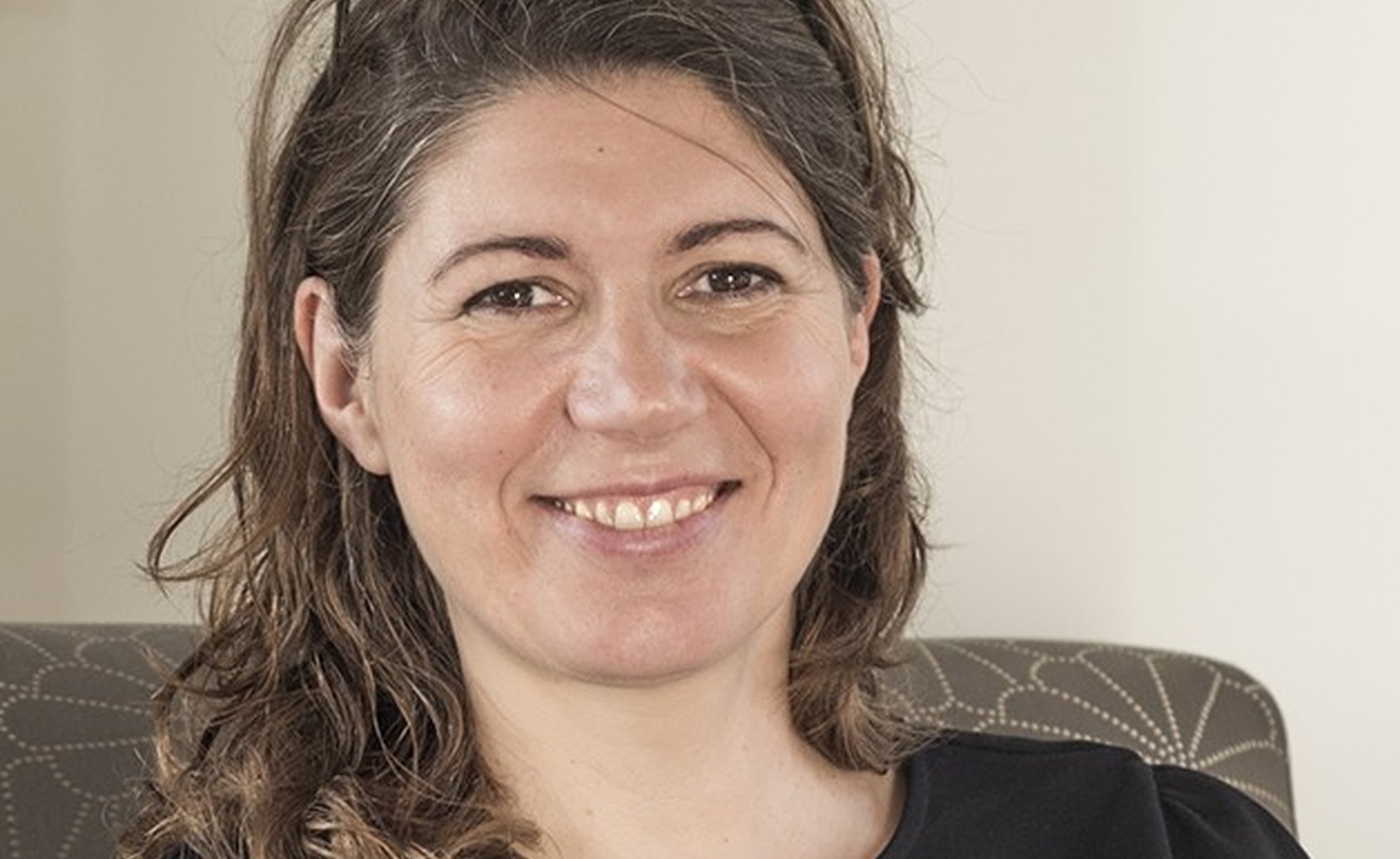
In this interview, we speak with Maureen Evans, an ICF‑accredited executive coach with a rich background in corporate leadership and somatic practice. Drawing on senior roles at Barclays and Deloitte, Maureen supports leaders across sectors as they navigate transition, growth and change. Here, she reflects on her coaching journey with the AoEC and the professional insights that continue to shape her work with clients.
Earlier in your career, you spent 20 years working in consulting and financial services organisations including Zurich, Andersen, Deloitte and Barclays. Who or what introduced you to coaching and led to you signing up for coach training with the AoEC?
Coaching is something that I have valued for a while. I was lucky enough to experience coaching with an external coach early on in my banking/consulting career. I always remember how much impact those few sessions had on my sense of who I was and how I operated in the workplace. I don’t think I would have been so successful in my working life and my leadership roles without that early coaching.
Later on, I left the corporate world and had a change of direction to train in Pilates and set up a wellness studio (which I’m still operating alongside my coaching business). I became aware that the behavioural and somatic techniques that I used in my movement work were relevant in the corporate world. When I came across the AoEC, I knew I had found the link!
You originally did the Practitioner Diploma in Executive Coaching in 2017. What prompted you to pursue further training with the Professional Practitioner Diploma in Executive Coaching, and how did you know it was the right time for you to take this next step?
My initial impetus to pursue further training was to get ICF Accreditation. I’d been meaning to pursue accreditation for a while, but never quite got round to it. The alignment of the programme with the ICF PCC Competencies and inclusion of supervision and mentor coaching facilitated that really well. I discussed the programme with my supervisor we decided that the time was right. Despite starting the programme primarily for certification, what I got out of it was much more than I had imagined.
What were some of the positives and challenges you experienced while doing the Professional Practitioner Diploma?
Where do I start with the positives? My peers on the course were incredibly supportive; the content was really well curated with a broad range of subjects enabling me to study more in areas of interest; and the course faculty were knowledgeable, supportive and challenging.
The challenges that I experienced were the long days which I found more tiring than I expected and the volume of content meant that it was tricky juggling my work and life alongside study. However, I knew even as I was doing the course that I was learning loads and that the long days and volume of work was worth it.
How would you describe the transition from the Practitioner Diploma to the Professional Practitioner Diploma in terms of complexity and depth of learning?
The Practitioner Diploma was a great beginning and took us to the level of depth required of us. The Professional Practitioner Diploma introduced many more coaching concepts and left me as the student to decide how much depth to go into. I found this quite overwhelming at first but learned to appreciate the freedom and challenge that this offered.
On the subject of complexity, the systems thinking and other work that we did in the Professional Practitioner Diploma shifted my thinking on the concept of complexity. My outputs for the Practitioner Diploma focused on the importance of finding space and simplicity. In contrast, my outputs for the Professional Practitioner Diploma recognised complexity and embraced this in the coaching context. My view is that this perspective is essential in supporting our clients in a complex and changing world.
In what ways has the Professional Practitioner Diploma equipped you with new tools or perspectives that you didn’t gain from the Practitioner Diploma? How do these new insights elevate your coaching practice?
The Practitioner Diploma gave me an understanding of coaching and a good basis upon which to start, but the Professional Practitioner Diploma strengthened the foundations of my coaching. From these strengthened foundations, I feel much more comfortable flexing and adapting my coaching in order to be truly being myself as a coach and meet the other person as a human being.
Looking back, what advice would you give to someone considering moving from the Practitioner Diploma to the Professional Practitioner Diploma? What should they prepare for in terms of personal and professional growth?
Prepare for the amount of work involved. I hadn’t fully appreciated how much work it would be, but it was 100% worth it.
In terms of personal growth, this programme will deepen their understanding of themselves enormously and allow them to engage with stakeholders and clients and their complex systems more effectively.
What elements of the Professional Practitioner Diploma’s modules particularly resonated with you and why?
I am naturally drawn to Gestalt so having John Leary-Joyce deliver a Gestalt workshop was a real treat. I also loved the work around identity and culture. This helped me to understand myself and clients better. Finally, the work around Self Compassion and Ubuntu Coaching changed who I am and how I coach.
You have gone on to be an ICF-certified executive coach. Why was becoming credentialled important to you and what value has it brought your practice?
One of my drivers in doing the Professional Practitioner Diploma was to gain the ICF Certification as my original Practitioner Diploma wasn’t aligned with any certification. My strong inner critic kept telling me that I wasn’t a proper coach without the ICF certification! However, the ICF Competency Framework is of much greater value than just a certification. It has given me a framework upon which to hang my coaching so that I can relax and meet the human in front of me rather than try to work out what to say next.
You founded your own practice The Complete Leader in 2017. Who do you typically coach and what are the issues or opportunities you normally support them with?
My personal purpose is to “support lifelong learning and awareness of self to allow all ages to be purposeful and successful in what they choose to do”. Most of the issues that people come to me for relate to transition – whether it’s the transition to a new leadership role or transition from a chief executive role to something else. Of course, what we end up partnering on are the fundamentals around inner critic, perfectionism, self-awareness, emotional intelligence and use of body and breath to deepen awareness.
I’ve worked across sectors from charity to property development and with self-funded professionals. Drawing on my background as an internal audit leader, I also partner with Rosewell House, an organisation that offers coaching and development for leaders in financial services internal audit, risk and compliance.
I also run a “Space to Think” group session for leaders and coaches once a month which is a drop-in session where I guide clients through coaching questions and they silently write their answers. It’s magical and I’m always amazed at how much individuals take from it.
Can you share a success story or testimonial from one of your clients that highlights the impact of your coaching?
One of my clients engaged me to help her set out a plan for what to do when she stepped down as chief executive in three years. We started by speaking about retirement and cinema trips and generally shifting gear. However, as the coaching developed, it became clear that she wanted to offer more in her field of expertise and by the end of the coaching engagement she was reaching out to global leaders to explore having a more global impact in her field of expertise. I love that coaching unlocks hidden parts of yourself and offers the opportunity to do more at all ages and stages of development.
What do you find most rewarding about your work as a coach?
The “ah-ha” moments. Leaving the silence to allow someone to really think and realise something that they hadn’t been aware of and the impact of this on their career and life. It’s an enormous privilege and I feel enormously lucky to be able to engage with people in this way.
Our deepest thanks to Maureen for sharing her personal journey and experience of coach training at the AoEC.
News
AoEC appoints Virginia Molet to head Spanish launch
20th March 2026 by Lee Robertson
The Academy of Executive Coaching (AoEC) is delighted to announce the appointment of Virginia Molet, founder of Gravitae Academy, as…
Interview
Practitioner Diploma / “There is true power in presence”
20th March 2026 by Lee Robertson
Kofi Kyei is a people centred talent and culture specialist with deep experience partnering with blue chip organisations across commerce…
Article
How organisations can help their employees look inwards and learn about themselves
20th March 2026 by Rochelle Trow
Organisations say they want resilient, grounded leaders who can navigate complexity without burning out. Yet the structures they reward still…