 +44 (0) 20 7127 5125
 Alumni Login
If you would like to discover more about coaching and training as a coach, do come along to one of our free upcoming virtual open events or webinars.
Beyond the model: what really happens in a coaching conversation
19th May by Lee Robertson
Reading time 3 minutes
Share this article:


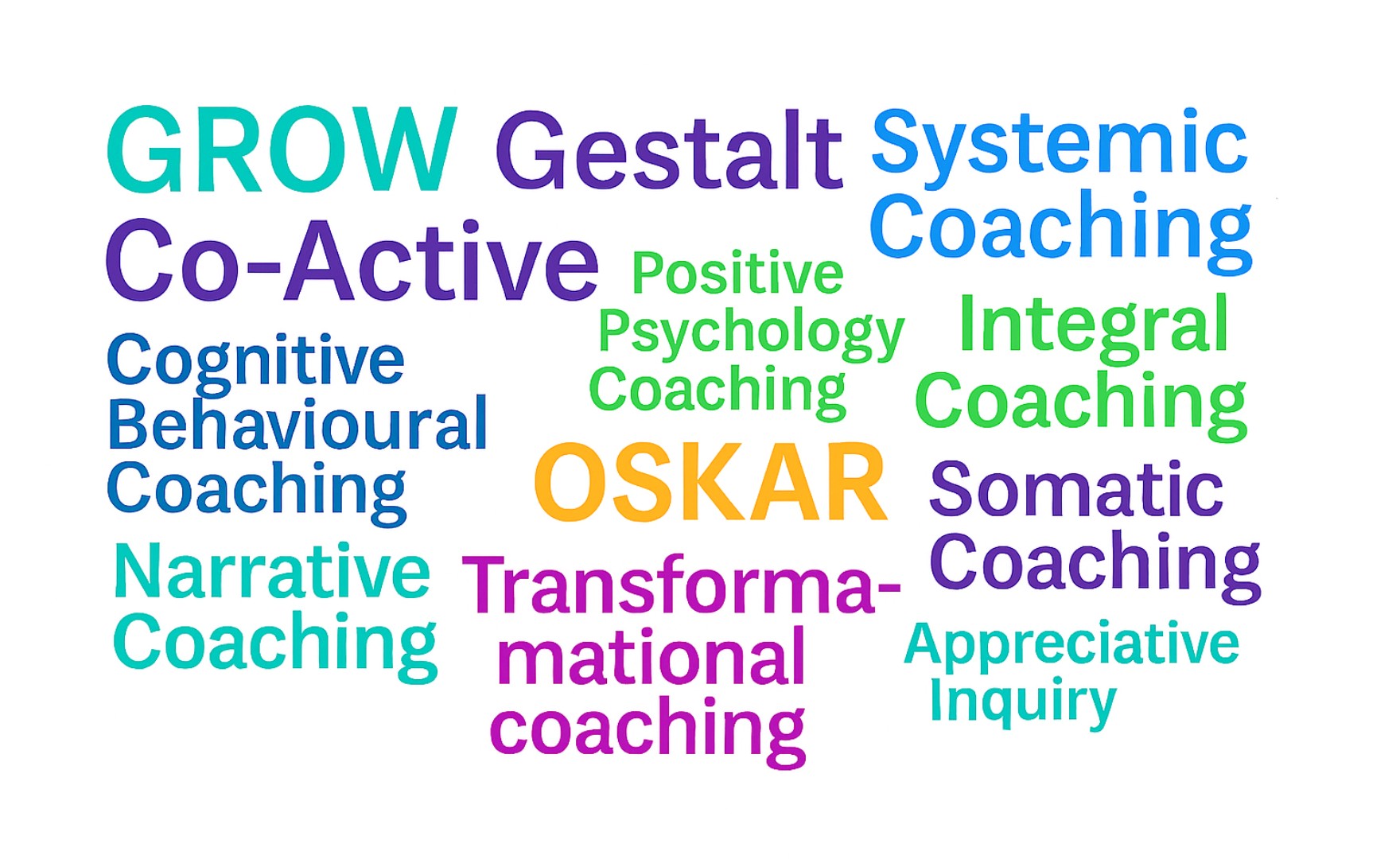
Many coaches begin with a model.
Whether it’s GROW, Co-Active, Gestalt or a systemic approach, these frameworks and many others provide something essential early on - structure, clarity and a sense of what to do next. At this stage, they are not just useful - they are necessary.
But over time, something shifts.
The most powerful coaching conversations rarely follow a neat sequence. They move, adapt and unfold in ways that can’t always be predicted. And eventually, many coaches reach a quiet but important crossroads: continue to rely on the model or begin to trust the process.
What is really happening in a coaching conversation
Coaching is not linear. It is a dynamic, relational process shaped in real time between coach and client.
Beneath the surface, several things are happening at once:
- Attention shifts - what the client notices begins to change
- Meaning evolves - experiences are reinterpreted
- Emotions are processed, not just analysed
- Perspective expands - new possibilities emerge
- Identity develops - clients begin to see themselves differently
Different models emphasise different elements. GROW provides focus and forward movement. Co-Active centres the whole person. Systemic coaching brings in context. Gestalt sharpens present-moment awareness.
Each offers a valuable lens. But none of them is the conversation.
The model as scaffolding, not a script
For many coaches, the challenge is not learning a model - it is knowing when to loosen their grip on it.
As Practitioner Diploma graduate Helen Tuddenham reflects: “I got to the point where I focused too much on the model rather than trusting the process… Being a bit looser means you can trust your intuition for asking the right questions. The structure is still there in the background, but it is not as important anymore.”
The model provides a foundation. But held too tightly, it can begin to constrain the very thinking it is meant to support - pulling the coach’s attention away from the client and towards the framework.
From structure to fluidity
As confidence grows, coaching often becomes more fluid.
Another participant of the AoEC’s Practitioner Diploma in Executive Coaching, Jay Jupp, describes this shift clearly: “I don’t coach in a linear or formulaic way, I coach by dancing with my clients.”
This “dance” reflects a different kind of attention - one that is responsive rather than procedural.
She says: “My intuition is not something to suppress… but a core coaching tool… sensing shifts in energy and responding in the moment.”
Coaching, in this sense, becomes less about following steps and more about being fully present to what is emerging.
It is also more embodied than it first appears as Jay explains: “Coaching is not just cognitive, it’s embodied. My presence, pace, use of silence… all shape the space I create.”
The coach as instrument
With experience comes a deeper shift - from using models to using the self.
As fellow AoEC graduate, Kofi Kyei explains: “My coaching has evolved… to one where I tap into my whole self in service of the coachee. I have become more comfortable using myself as the instrument of the co-creation of possibilities.”
And often, the work happens in subtler place as Alison Seddon who also did the Practitioner Diploma in Executive Coaching comments: “We are looking for what can be found ‘between the lines’.”
Together, these perspectives point to something important: coaching is no longer something the coach doeswith a model, but something they create with the client.
Developing the courage to trust the process
Letting go of rigid structure is not about abandoning discipline. It is about responding to what is actually happening.
This requires courage.
It means:
- Getting comfortable with and allowing silence
- Following the client’s energy
- Staying with uncertainty
- Trusting your intuition alongside your training
As Jay mentions in her interview: “When I relied too heavily on models, something closed down… I learned how to contract clearly and then let go.”
Structure still exists - but in the background, supporting rather than directing.
Trusting what emerges
For newer coaches, models remain an essential starting point. They provide clarity and a shared language for learning. But they are not the destination.
The real work lies in the space between structure and spontaneity - where insight and change emerge in ways that can’t be fully predicted.
To coach well is not to follow a perfect process. It is to create the conditions for something meaningful to happen - and to trust that, with the right presence and attention, it often will.
Article
The rise of the workplace situationship and what it means for leaders
18th August 2026 by Lee Robertson
A new workplace trend is emerging, and it should give leaders pause for thought.
Interview
In conversation with Sarah Carrington
18th August 2026 by Lee Robertson
As Sarah Carrington says goodbye to the AoEC after 18 years, we take the opportunity to look back on an…
Interview
Professional Practitioner Diploma / “The PPD challenges you to elevate your practice”
18th August 2026 by Lee Robertson
Susan Banda-Mudiwa is an executive coach, leadership development consultant and former CEO with more than two decades of leadership experience…