 +44 (0) 20 7127 5125
 Alumni Login
Article
The rise of the workplace situationship and what it means for leaders
18th August 2026 by Lee Robertson
A new workplace trend is emerging, and it should give leaders pause for thought.
Share this article:


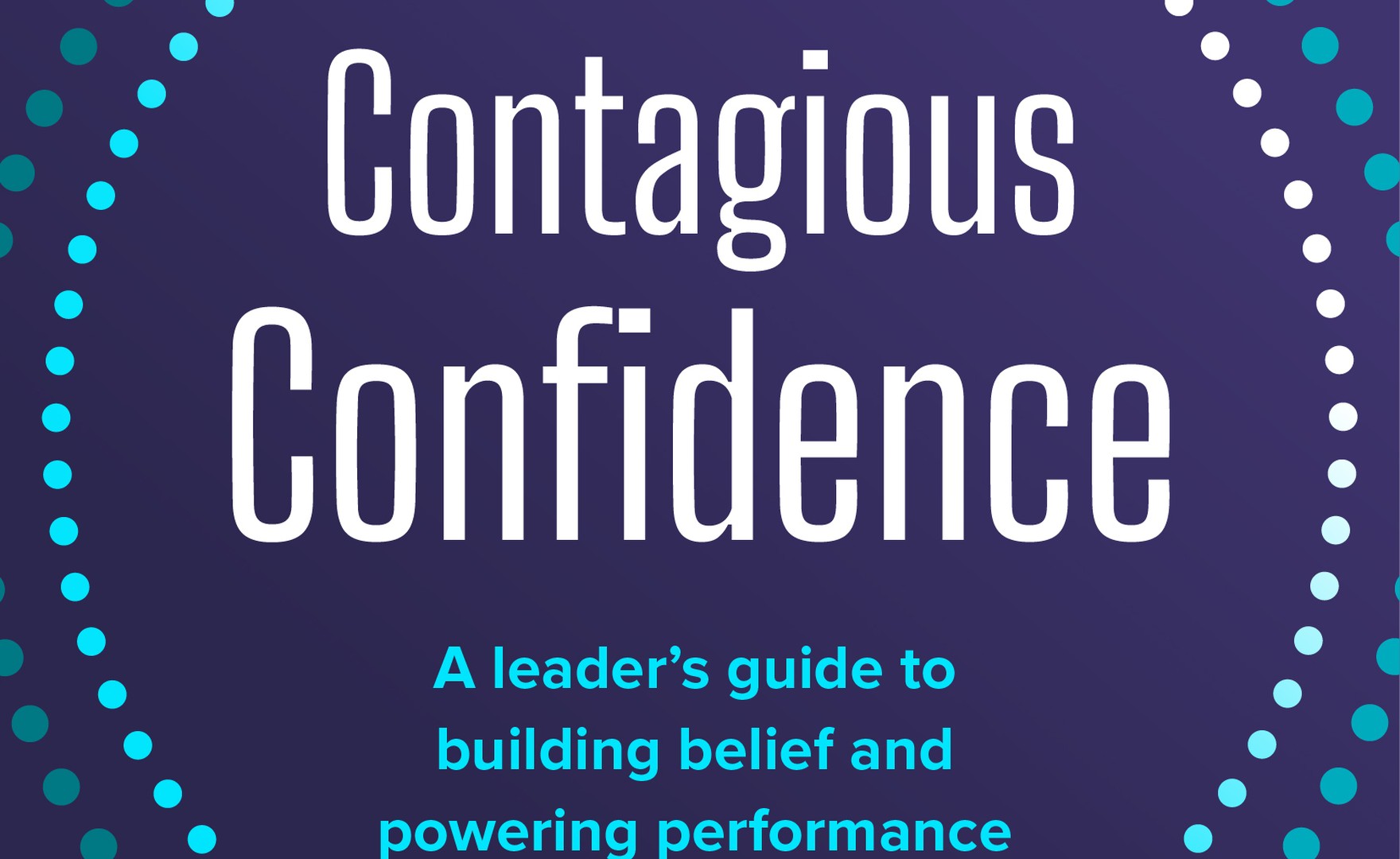
Confidence grows through action. Team members deepen their trust in themselves by expanding their understanding of what they’re capable of. Trying something novel uncovers new data and opens up possibilities: if I was able to do that, what else might I be able to do? Belief-building leaders extend an invitation for team members to stretch themselves by taking on scary new challenges and they offer unstinting support as their team members step into the unknown.
Leaders must calibrate the level of scariness, the level of stretch. Too little stretch can result in apathy, disengagement and a drop in self-belief: perhaps this is all I can do. Too much stretch can trigger the equivalent of stage fright, with the team member feeling unable to act, paralysed by terror. We’re aiming for the kind of stretch that bolsters self-belief as the team member surprises themselves with their ability to navigate new territory. Uncomfortable but not terrifying.
It’s important to acknowledge that it might not only be the team member who needs to push through some discomfort. Leaders are also managing their own worries as they judge the level of challenge to set. They don’t want to set a team member up to fail.
One global talent leader put it plainly: “I think we can be over cautious about how much we stretch our people. Yes, there have been some examples of an individual being elevated too rapidly, and it hurt their reputation, their career, their confidence. But these scenarios are the exception. More often I think that we talk ourselves out of giving really stretching opportunities.” Yes, there’s a risk that someone will fail. There’s a greater likelihood that they’ll succeed, especially with coaching and support.
I spoke to a leader, Claire who shared her story of being tasked with putting together an upskilling strategy for data and analytics, an area she knew nothing about. The brief required something “bold and ambitious” - a big challenge but one that Claire’s boss believed her to be ready for. Claire was understandably nervous but was able to step forward and grab hold of the challenge because she knew that she could absolutely count on her manager for support. “I knew that if I picked up the phone and asked for her help, she would always support me,” she told me.
The result was an upskilling strategy and a boost to Claire’s self-belief. “It gave me huge confidence that I could take on a brand-new agenda that I knew absolutely nothing about and find a path through. Next time I’m not going to be quite so terrified.”
Supporting team members to grow their confidence involves being alongside them when they are, perhaps literally, quaking with fear. Leaders can support fearful team members to take action by reminding them that we all have the capacity to learn and grow.
They might not be confident, or even capable, of doing this thing yet, but with repeated action and learning, they can be. Offering that simple three-letter word helps; if someone says to you “but I can’t do that,” try gently reframing their thinking with the words “you can’t do that yet… and I believe that you will get there.”
One sign that you’re offering just the right amount of stretch is that people experience setbacks. It shows you’re challenging them sufficiently to fuel their growth – you’re pushing them just beyond their current capabilities. But setbacks can be difficult and there’s a risk that the team member interprets a setback as confidence-sapping evidence of a personal failing. It can be helpful to offer a reminder: setbacks aren’t pleasant, but they are part of being human.
Gently offer some perspective. Invite your team member to mentally step forward in time and look at the setback from the perspective of a week, a month, a year’s time. Mental time travel offers a way to see the setback for what it is: a tricky episode in a much longer story, not a moment that defines who they are or what they’re capable of.
Judging the stretch for a single team member might look like individual development. It is. And it's more: it's how team confidence is built. Teams flourish when there’s a climate of peer-to-peer trust in both capability (my teammates bring the skill and expertise that’s required) and commitment (we are all here for team success, not individual glory.) When a team member comes through a challenge and expands their understanding of what they're capable of, the experience not only bolsters their self-belief but also adds to the team’s understanding of the shared skills and expertise that they can call on. Both individual and collective confidence grows.
Our deepest thanks to Julie for sharing this guest blog.
About the author
Julie Smith is an experienced leadership coach, award-winning author and speaker with a mission to encourage and enable leaders to deepen their awareness and grow their impact. Since founding boutique leadership consultancy Talent Sprout in 2010, Julie has coached hundreds of executives and leadership teams in the UK and internationally. She’s trusted by well-known organisations including PepsiCo, Ageas, Weetabix, Center Parcs and Cambridge University Press. An award-winning author, Julie’s latest book is Contagious Confidence: A leader’s guide to building belief and powering potential.
Article
18th August 2026 by Lee Robertson
A new workplace trend is emerging, and it should give leaders pause for thought.
Interview
18th August 2026 by Lee Robertson
As Sarah Carrington says goodbye to the AoEC after 18 years, we take the opportunity to look back on an…
Interview
18th August 2026 by Lee Robertson
Susan Banda-Mudiwa is an executive coach, leadership development consultant and former CEO with more than two decades of leadership experience…