 +44 (0) 20 7127 5125
 Alumni Login
If you would like to discover more about coaching and training as a coach, do come along to one of our free upcoming virtual open events or webinars.
Professional Practitioner Diploma Programme / “I’d describe it as moving from ‘doing’ coaching to ‘being’ a coach”
23rd June by Lee Robertson
Reading time 6 minutes
Share this article:


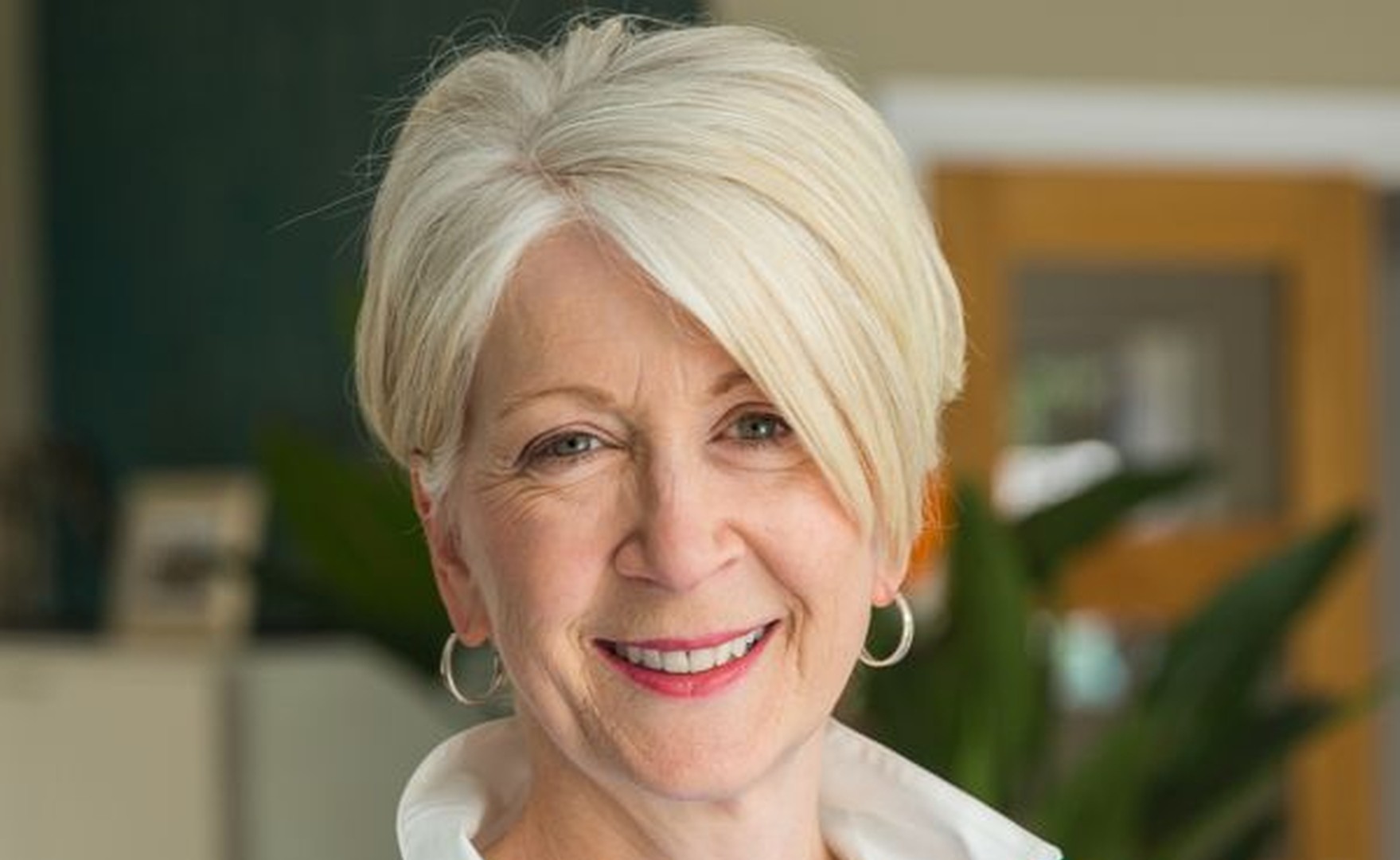
In this interview, we speak with Orla Cochrane, an experienced leadership coach and graduate of the AoEC’s Practitioner Diploma and Professional Practitioner Diploma. With a career spanning organisational and business change across the UK, Europe and Latin America, Orla brings deep insight into the realities of leading in complex, evolving environments. Since qualifying with the AoEC in 2013, she has coached leaders across financial services, the public sector, not-for-profits and start-ups, supporting them to navigate change with greater awareness, effectiveness and humanity. Here, she reflects on her coaching journey, the impact of her AoEC training, and her commitment to making coaching more accessible, meaningful and sustainable for a wider audience.
You previously worked for the RSA Insurance Group (now INTACT Insurance) in a variety of roles before leaving corporate life to set up your own coaching practice. Who or what introduced you to coaching and led to you signing up for coach training with the AoEC?
During my corporate career, I worked in senior operational and strategic positions in the UK and internationally and was consistently motivated by the human side of organisational change. I came to realise that organisations only change when people do, which sparked my interest in coaching. At a key point in my career, I experienced executive coaching myself and saw its impact firsthand. As a result of knowing myself better, I developed my leadership style to include a coaching approach, and I saw the benefits of this in my team’s performance which spurred me on to deepen my experience and broaden my skills. When I left my corporate career, I knew that coaching was what I wanted my next career chapter to focus on and I chose AoEC based on strong recommendations and thorough research, particularly valuing its focus on coaching in business.
You originally completed the Practitioner Diploma in Executive Coaching in 2013. What prompted you to pursue further training with the Professional Practitioner Diploma in Executive Coaching, and how did you know it was the right time for you to take this next step?
It was a long time after my Practitioner Diploma that I thought about doing the next level of qualification. My interest initially started as a step towards ICF accreditation, but almost as soon as the programme began, that became less important. My focus shifted to deepening my understanding of who I was as a coach and broadening my skills. At the time, I was coaching more C-suite executives and wanted to make sure I was doing the work needed to be the best coach I could be for them.
What were some of the positives and challenges you experienced while doing the Professional Practitioner Diploma?
Where do I start? The programme was so much more than I expected. One of the key positives was the incredibly supportive cohort I shared the journey with. From the outset, everyone was open and honest, which created an environment that truly supported learning and growth. It made me feel able to take risks, challenge myself, and develop in ways I hadn’t anticipated. This was further strengthened by the wonderful faculty, led by the peerless John Gray, who consistently offered just the right balance of support and challenge.
The mentor coaching sessions were first class and, alongside the peer coaching sessions, provided a strong framework for continual practice and development.
The international nature of the programme was something I hadn’t fully appreciated before starting. Although I’ve worked internationally for much of my career, the diversity of cultures represented on the programme brought a real richness to the learning experience. It has helped me develop a coaching mindset that is even more curious, open, and receptive when entering any new coaching relationship.
In terms of challenges, my first was learning not to expect myself to be at the required level immediately - my perfectionist “inner chimp” was shouting loudly from the outset, and I had to work hard to give myself the grace and space to develop.
Secondly, I needed to let go of some of the safety nets in my coaching practice and allow myself to be truly present in the moment, rather than worrying about getting everything right. My biggest breakthrough came when I stopped taking notes during coaching sessions. Although that felt like a huge challenge, it brought enormous rewards by freeing me to be wholly present and significantly deepening my ability to coach.
How would you describe the transition from the Practitioner Diploma to the Professional Practitioner Diploma in terms of complexity and depth of learning?
The Practitioner Diploma gave me an excellent foundation in coaching techniques and helped me develop my identity and style as a coach. The shift from the Practitioner Diploma to the Professional Practitioner Diploma is a significant one - I’d describe it as moving from ‘doing’ coaching to ‘being’ a coach. There is a great deal to absorb and integrate so that it makes sense to you both as a human being and as a coach, and at times it felt a little overwhelming - but this is the work.
In what ways has the Professional Practitioner Diploma equipped you with new tools or perspectives that you didn’t gain from the Practitioner Diploma? How do these new insights elevate your coaching practice?
My coaching practice has been significantly elevated by the concepts introduced on the programme, particularly systems thinking and partnering. Systems thinking, and the tools we learned, have proved invaluable when working with senior leaders operating in increasingly complex and uncertain environments.
The concept of partnering has been pivotal to my development as a coach. Reflecting on who I was before the programme, I can see that I carried the full responsibility for each session on my shoulders. That created an unhelpful and stifling pressure. Focusing on building a true partnership with my clients has freed me to become a more confident and effective executive coach
Looking back, what advice would you give to someone considering moving from the Practitioner Diploma to the Professional Practitioner Diploma? What should they prepare for in terms of personal and professional growth?
My advice would be to take some time between each of the Diplomas so that you can bring substantial experience to the programme. I’d also say be prepared to work hard and commit to significant learning outside the programme days. Finally, enjoy investing in yourself and make the most of the opportunity.
What elements of the Professional Practitioner Diploma’s modules particularly resonated with you and why?
The partnering module was particularly instructive for me. As a novice coach, I remember being very focused on getting quickly to the point and the topic of a session. Learning to slow down and focus on partnering - setting up the relationship and session so that both parties are clear that this is a partnership in which we each have responsibilities - has been transformational for my coaching practice.
The modules on Being Human and Ubuntu were also incredibly powerful. Together, they deepened the programme’s impact on me by shifting my focus from coaching the problem to coaching the person.
You founded your own practice – Cochrane Coaching & Development - in 2012. Who do you typically coach and what are the issues or opportunities you normally support them with?
I typically work with senior leaders in large financial services organisations who are leading strategic change. My preference is to work in a programmatic way, closely aligned to the strategic change the business is seeking to achieve, giving the client the space needed to work on the personal and leadership shift required in them. As coaching relationships develop, clients’ goals often evolve, and the areas I most frequently support them with are confidence, resilience, navigating complexity, and leading change.
Can you share a success story or testimonial from one of your clients that highlights the impact of your coaching?
There are so many small moments in coaching sessions where the real impact is made: the behavioural observations no one has ever offered a senior leader before; the short question that unlocks a profound moment of deeper awareness; the silence that illuminates the way forward; and the laughter and fun that can emerge from true partnership and trust, where the client feels able to explore and even play together with me, their coach.
What do you find most rewarding about your work as a coach?
As my experience and confidence as a coach have grown, the most rewarding aspect of my work has been witnessing my clients’ development and seeing how that translates into improved performance - in themselves, their teams, and ultimately their businesses. That, to me, is the true purpose of executive coaching, and I am deeply grateful to the AoEC and the Professional Practitioner Diploma for supporting me in working with executives in such a trusted and impactful role.
Our sincerest gratitude to Orla for sharing her personal journey and experience of coach training at the AoEC.
Article
The rise of the workplace situationship and what it means for leaders
18th August 2026 by Lee Robertson
A new workplace trend is emerging, and it should give leaders pause for thought.
Interview
In conversation with Sarah Carrington
18th August 2026 by Lee Robertson
As Sarah Carrington says goodbye to the AoEC after 18 years, we take the opportunity to look back on an…
Interview
Professional Practitioner Diploma / “The PPD challenges you to elevate your practice”
18th August 2026 by Lee Robertson
Susan Banda-Mudiwa is an executive coach, leadership development consultant and former CEO with more than two decades of leadership experience…